
 $169
$169 9 min
9 minFluid, Placenta and Baby's Position: What Shapes Your Images
Why amniotic fluid, placenta location and your baby's position shape 3D/4D ultrasound images, and exactly how our re-scan policy works when the face is hidden.
By the Video Prenatal team · September 16, 2026 · 4 min read
Our ultrasounds are elective, non-diagnostic, and performed solely for keepsake and peace of mind purposes. They are not a substitute for a medical ultrasound from your healthcare provider.
Every 3D/4D session is a little different, even with the same machine and the same technician. Three natural factors have the biggest effect on 3D ultrasound image quality: the amniotic fluid around your baby, where the placenta is located and how your baby decides to lie that day.
None of these are anything you did wrong, and most of them are simply part of how pregnancy works. Understanding them helps you prepare, set realistic expectations and know how our re-scan policy works.
Amniotic fluid: the window in front of the face
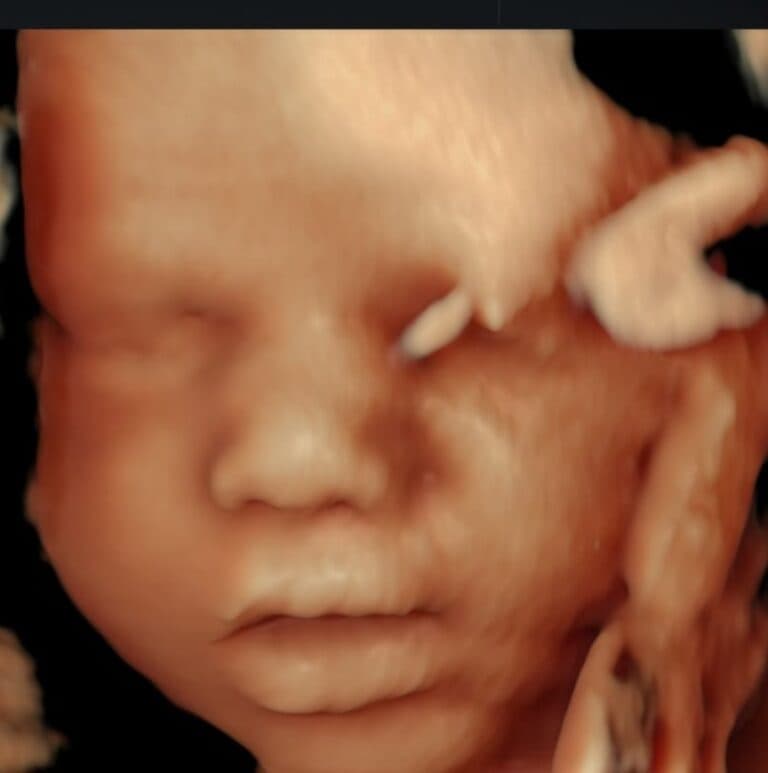
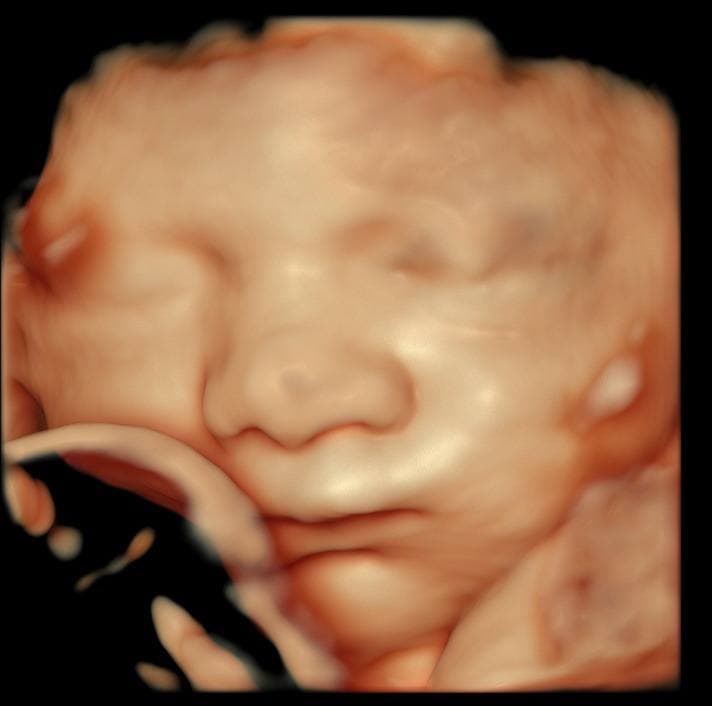
Ultrasound needs fluid to see clearly. A pocket of amniotic fluid in front of your baby's face separates it from the uterine wall, the placenta and everything else, so the 3D image can show smooth, defined features. When there is less fluid, the face may blend into what is around it and the image looks textured or blurry.
Fluid levels vary naturally from mom to mom and through pregnancy. The one thing within your control is hydration, which is why we recommend moms double their water intake in the weeks leading up to the appointment. More fluid in front of the baby's face improves image quality. We explain this in why drinking water before your ultrasound makes a difference. If you have any health condition, check with your OB or midwife first.
Placenta placement: anterior or posterior
The placenta attaches somewhere on the wall of the uterus. When it is on the back wall (posterior), the sound waves usually reach your baby directly. When it is on the front wall (anterior), the sound travels through the placenta first, and images can be a little softer or take more patience to capture.
An anterior placenta is common and is simply where the placenta happened to attach. Your OB or midwife can tell you where yours is from your medical scans. It does not mean you cannot get lovely pictures, only that the view may take a bit more time.
With an anterior placenta, the technician may try different angles, and sometimes the clearest views come when your baby turns slightly toward the side. Patience and a relaxed mom are often the best tools we have.
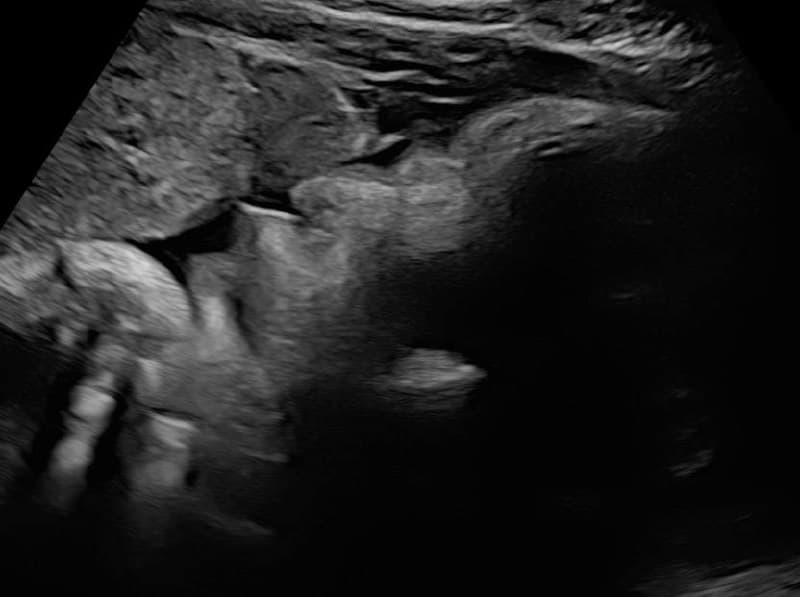
Your baby's position on the day
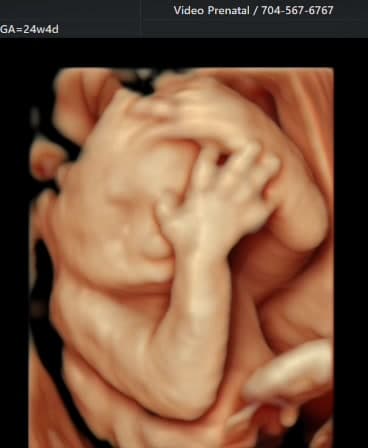
Babies have their own plans. Some face the screen right away, others face your back, press their face against the placenta or hide behind their hands, feet or the umbilical cord. Later in pregnancy there is also less room to turn.
During the session we may ask you to change position, walk for a few minutes or have a sip of something to encourage movement. Many shy babies turn with a little time and patience, and the 4D view often catches a sweet moment right after a stretch.
- Face turned toward your back or down toward the bed.
- Face pressed against the placenta or the uterine wall.
- Hands, feet or the umbilical cord covering the face.
- Less room to move in the final weeks of pregnancy.
Our re-scan policy, explained clearly
A re-scan is available with the Golden Memories and Mommy Bundle packages. If your baby's face cannot be seen due to position, the technician determines whether a complimentary re-scan is appropriate. A re-scan is not guaranteed, and if it is approved, it is scheduled Monday to Friday only.
The re-scan does not apply when image limits are due to low amniotic fluid, placenta placement, or the face being covered by hands, feet or the umbilical cord. Every baby is different, and image quality cannot be guaranteed. We share this openly so that you know exactly what to expect before you book.
What these factors mean for you
Most families leave with pictures they love, and a few simple steps give you the best chance: stay well hydrated, book at a stage that suits the images you want and give your baby time to cooperate. If you are wondering about common beliefs, such as whether you will always see a perfect face, our article on myths about seeing your baby's face on ultrasound clears them up.
HD rendering like HDlive Silhouette improves how an image looks, but it cannot replace fluid or change position. For the complete overview, visit our complete guide to 3D, 4D and 5D HD ultrasound.
Choosing a package with peace of mind
If seeing your baby's face is your main goal, Golden Memories, $129, and the Mommy Bundle, $169, both from 27+ weeks, offer the longest 5D/HD sessions and include the re-scan policy described above. If you would rather start with a shorter view, the 5D Sneak Peek, $99, from 22+ weeks, is a lovely first look.
You can compare our packages or book your session with no deposit required.
Part of our complete guide: The Complete Guide to 3D, 4D and 5D HD Ultrasound
Frequently asked questions
Does an anterior placenta mean I will not see my baby's face?
Not necessarily. It can make images softer or take more patience, but many families with an anterior placenta still see their baby clearly.
Can I get a re-scan if my baby is hiding?
With Golden Memories and the Mommy Bundle, if the face cannot be seen due to position, the technician determines whether a complimentary re-scan is appropriate. It is not guaranteed and, if approved, is scheduled Monday to Friday only.
Does the re-scan apply if I have low fluid?
No. The re-scan does not apply when image limits are due to low amniotic fluid, placenta placement, or the face being covered by hands, feet or the umbilical cord.
How can I improve my chances of clear images?
We recommend moms double their water intake in the weeks leading up to the appointment, as long as your healthcare provider agrees. Booking at the right stage and staying relaxed also help.