
 $169
$169 9 min
9 min🍼 Preparing for Baby's Arrival
Preparing for Your Baby's Arrival: A Calm, Complete Checklist
A calm, trimester by trimester checklist for preparing for baby's arrival: home, registry, hospital bag, family, keepsakes and a little rest for you.
By the Video Prenatal team · September 3, 2026 · 8 min read
Our ultrasounds are elective, non-diagnostic, and performed solely for keepsake and peace of mind purposes. They are not a substitute for a medical ultrasound from your healthcare provider.
Preparing for baby's arrival can feel like a second full-time job. There are lists from friends, lists from apps, lists taped to the fridge, and every one of them seems longer than the last. The good news is that you do not need to do everything, and you certainly do not need to do it all at once.
At Video Prenatal we have been welcoming expecting families in Charlotte since 2007, and we have heard every version of the question "are we ready?". This guide is the calm version of the checklist: what matters, roughly when to do it, and where to find more detail when you want it. Take what helps, skip what does not, and remember that your baby mostly needs you.
A simple timeline for preparing for baby, trimester by trimester
Spreading tasks across the pregnancy is the single best way to keep stress low. Nothing on this timeline is a rule. Energy levels, work schedules and family situations are different for everyone, so shift things earlier or later as you need.
A helpful habit is a short weekly check-in with your partner or support person. Ten or fifteen minutes on a weekend to look at the list, move one or two tasks forward and cross off what is done keeps everything visible without letting it take over your life. If you are doing much of this on your own, ask a friend or relative to be your check-in buddy.
- First trimester: focus on your prenatal care, rest when you can, and start a shared notes file or folder for ideas, questions and budget thoughts.
- Second trimester: this is often the most comfortable stretch for many parents, so it is a good time for bigger projects like planning the nursery, starting a registry and thinking about celebrations.
- Early third trimester: finish the big items, wash baby clothes and bedding, and pack most of the hospital bag.
- Final weeks: keep the bag by the door, confirm your plans for getting to the hospital or birth center, and give yourself permission to slow down.
Put prenatal care at the center of your plan
Every checklist should start here. Your OB or midwife is the person who knows your health, your baby's growth and your specific needs. Keep your appointments, write down questions between visits, and ask about anything that worries you, however small it seems.
It also helps to ask your provider early about the practical side of birth: which hospital or birth center you will use, whether there are tours or classes, what the pre-registration process looks like, and when you should call them once labor starts. Having those answers written down removes a lot of last-minute guessing.
Elective ultrasound sessions like ours are a wonderful way to bond and celebrate, but they are keepsake experiences. They never replace the medical scans and checkups your provider recommends.
Get the home ready without turning it upside down
A newborn needs surprisingly little space: a safe place to sleep, a spot for diaper changes, somewhere to keep clothes, and a comfortable chair for feeding. Many families find that a corner of the parents' bedroom works perfectly for the first months, and a full nursery can come together gradually.
If you are planning a dedicated room, our guide to setting up the nursery without the stress walks through the order that tends to work best: clean and paint first, then furniture, then the fun details. For anything related to safe sleep, follow the manufacturer's instructions and ask your pediatrician, who can point you to current recommendations.
Around the rest of the house, a few small changes go a long way: clear a landing spot near the door for the car seat and diaper bag, stock a drawer with basics in the bathroom, and set up a small caddy with wipes, burp cloths and a water bottle that you can carry from room to room.
Registry and hospital bag: the two lists everyone asks about
A registry is simply a wish list that helps friends and family know what you actually need. It works best when it is short, practical and flexible. Our post on baby registry essentials for first time parents breaks it down into categories so you can see what belongs on the list and what can wait.
The hospital bag is the other list that tends to cause worry. Most parents pack it sometime in the third trimester, and it usually includes comfortable clothes, toiletries, phone chargers, important documents, a going-home outfit for the baby and an installed car seat. For a full breakdown, see what to pack in your hospital bag, and always check your hospital's own guidance since each one has its own policies.
Bring siblings, grandparents and friends along for the ride
A new baby changes everyone's role in the family. Big brothers and sisters are becoming siblings, your parents may be becoming grandparents for the first time, and close friends are wondering how they can help without getting in the way.
Talking about those changes early makes the transition smoother. Young children often do well with simple, honest explanations and a job of their own, while grandparents appreciate knowing your plans for visits and help after the birth. We share practical ideas in getting siblings and grandparents ready for the new baby.
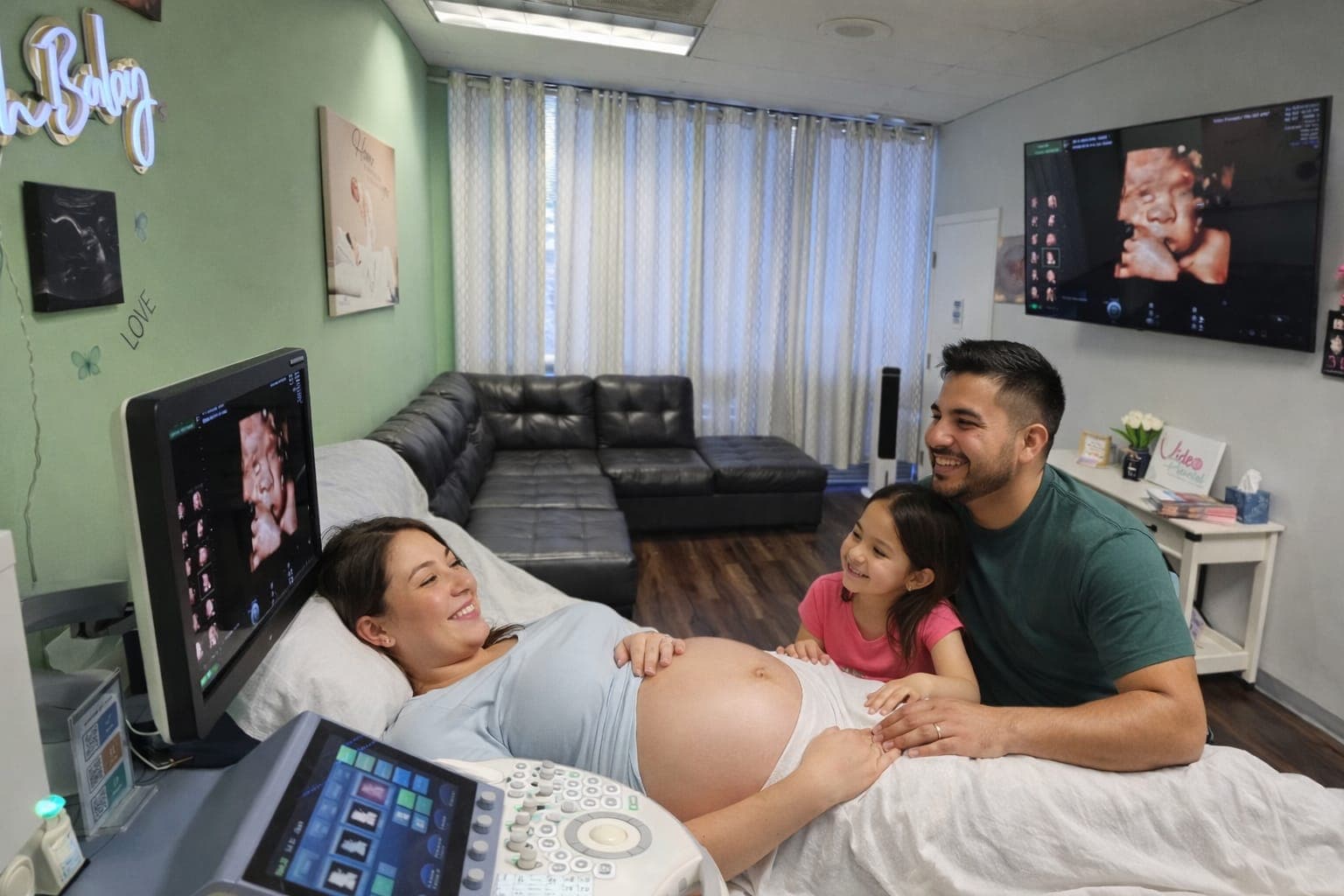
Family is also why our studio has seating for up to 8 guests. Many parents tell us that watching the baby together on the big screen was the moment an older child finally understood that a new brother or sister was really on the way.
Celebrate the milestones and save the memories
Preparing is not only about gear and logistics. Pregnancy is full of moments worth celebrating: the first time you hear the heartbeat, the day you learn whether you are having a boy or a girl, the first kick your partner feels. Planning a little space for joy is part of getting ready too.
If you are thinking about a party, our guide to planning a gender reveal your family will remember covers timing, simple ideas and how to keep the surprise safe until the big moment. And if you love keeping mementos, pregnancy keepsakes like photos, videos and Heartbeat Bears explains how families turn those milestones into something they can hold onto for years.
Handle the practical paperwork early
Some of the least exciting tasks are the ones that make the first weeks easiest. Most of them take only a phone call or a form, but they are much harder to think about once the baby is here and sleep is in short supply.
- Choose a pediatrician or family doctor for the baby, and ask your provider or friends for recommendations if you are not sure where to start.
- Call your insurance company to learn how to add the baby to your plan and how long you have to do it.
- Talk to your employer about leave, and write down the dates and contacts you will need.
- Pre-register at your hospital or birth center if they offer it.
- Think about a simple budget for the first months, including diapers, childcare and any time away from work.
Learn a few newborn basics before the birth
Nobody feels like an expert with a first baby, and that is okay. Many hospitals, birth centers and community programs offer classes on childbirth, feeding and newborn care, and some are available online. Ask your provider which ones they suggest.
Even a little practice helps: folding a swaddle on a stuffed animal, figuring out how the car seat buckles work, or learning where everything is in the diaper bag. Those small rehearsals turn into confidence when you are doing them for real with a newborn in your arms.
Take care of yourself in the final weeks
It is easy to pour every bit of energy into the baby and forget about the person carrying them. The last weeks of pregnancy can bring disrupted sleep, heavier days and a lot of emotions, so build in rest and ask for help early.
Think about the first weeks after the birth as well. Who can bring meals? Who can walk the dog or pick up an older child from school? Writing down a short list of helpers and tasks now means you will not have to organize anything when you are tired and adjusting. If you have questions about recovery, feeding or your mood after birth, your healthcare provider is the right person to ask, and it is completely normal to ask more than once.
Follow your baby's growth while you prepare
Knowing what is happening with your baby each week can make all the preparation feel more real and more manageable. Our pregnancy week by week guide follows development from the first heartbeat to birth, so you can match your to-do list with where you are in the journey.
Many parents also use those weeks to plan the moments they want to see with their own eyes, such as learning the gender in the second trimester or seeing their baby's face in 5D HD later on.
Where an elective ultrasound fits into your plan
If you would like to add a keepsake scan to your preparations, the right package depends on your week. Early on, First Peek ($59, 7 to 40 weeks, 2D) lets you see or hear the heartbeat and take home printed pictures. Gender Reveal ($79, 15 to 22 weeks, 2D/3D) is the favorite for parents planning a party.
From 27 weeks, Golden Memories ($129) and the Mommy Bundle ($169) offer longer 5D/HD sessions, with the Mommy Bundle including unlimited digital pictures, an 8K hyperrealistic image and a Heartbeat Bear. You can compare every option on our ultrasound packages section and book a time that works for your family. There is no deposit, and we are here Monday through Saturday by appointment. Hablamos Español.
Frequently asked questions
When should I start preparing for my baby's arrival?
Most families spread preparations across the pregnancy, doing bigger projects in the second trimester and finishing the essentials early in the third. Start with your prenatal care and add the rest at a pace that feels comfortable.
What is the most important thing to have ready before the baby comes?
A safe place for the baby to sleep, a properly installed car seat, and a plan for getting to the hospital or birth center. Your pediatrician and your hospital can answer specific safety questions.
Do I need a full nursery before my baby is born?
No. Many families keep the baby in their own room at first and finish the nursery gradually. What matters most is a safe sleep space and easy access to the basics.
Can an elective ultrasound be part of my preparation?
Yes, many parents book a keepsake scan to bond and share the moment with family. It is elective and non-diagnostic, so it is an addition to your prenatal care, never a replacement.