
 $169
$169The Complete Guide to 3D, 4D and 5D HD Ultrasound
Everything parents want to know about 3D, 4D and 5D HD ultrasound: how each works, the best weeks to book, what shapes your images and how to prepare.
By the Video Prenatal team · September 2, 2026 · 9 min read
Our ultrasounds are elective, non-diagnostic, and performed solely for keepsake and peace of mind purposes. They are not a substitute for a medical ultrasound from your healthcare provider.
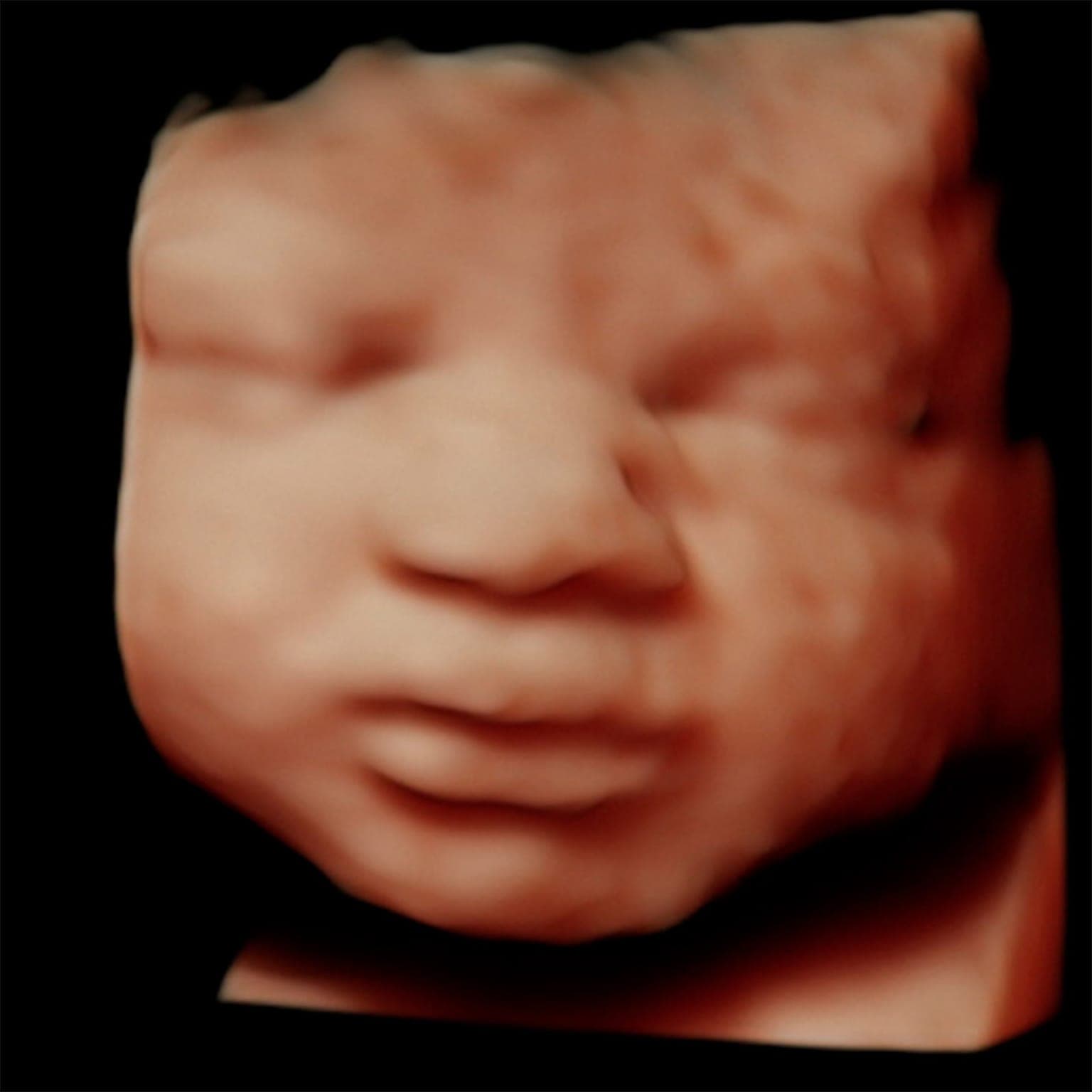
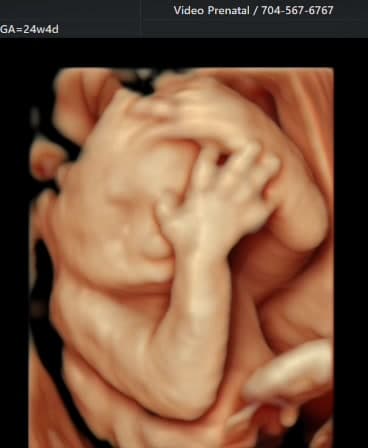
Seeing your baby's face for the first time is one of those moments families remember for years. A 3D 4D ultrasound turns the black and white shapes of a traditional scan into a warm, detailed picture of your little one, and with 4D you can watch that picture move: a yawn, a stretch, a tiny hand drifting up to the cheek.
Since 2007, our family-owned team in Charlotte has guided families through these visits. This guide gathers everything we explain every day in the studio: what each type of ultrasound shows, what the terms 5D and HD really mean, the best weeks to book, what affects your images and how to get ready. Each section links to a deeper article when you want more detail.
What 2D, 3D, 4D and 5D HD ultrasound actually mean
All of these scans use the same basic tool: sound waves that bounce back from your baby and are turned into an image. The difference is in how that information is collected and displayed.
A 2D ultrasound shows a flat, black and white slice, the kind of image most parents know from their medical visits. It is excellent for seeing the heartbeat, measuring growth and, from around the middle of pregnancy, looking for the signs of boy or girl. A 3D ultrasound gathers many slices at once and builds them into a still, three-dimensional picture with depth and a skin-like tone. A 4D ultrasound is simply 3D in real time, so you see your baby move as it happens.
5D is not a new dimension. It is the name commonly used for HD rendering, where the software adds realistic lighting and softer skin tones to a 3D or 4D scan so the result looks more lifelike. We explain each one side by side, with example images, in 2D, 3D, 4D and 5D HD ultrasound: what is the difference.
- 2D: flat black and white view, heartbeat, measurements and gender.
- 3D: still images with depth that show your baby's features.
- 4D: 3D in motion, so you can watch expressions and movement live.
- 5D HD: 3D and 4D with enhanced light and skin tones for a more natural look.
The technology behind our images: GE Voluson E10 and HDlive Silhouette
The machine matters. At Video Prenatal we scan with a GE Voluson E10, and we are the exclusive provider of HDlive Silhouette in Charlotte and nearby areas. HDlive uses a virtual light source that the technician can position to create soft shadows and depth, the way a photographer uses a lamp in a portrait. Silhouette is a rendering style that gives the image a gentle, translucent look and helps outlines and contours stand out.
It is important to know what this technology does and does not do. It is a way of displaying the same scan, not a different kind of scan, and it cannot change how your baby is lying or how much fluid is in front of the face. If you are curious about why these images look so real, read HDlive Silhouette: why your baby's images look so real.
Many parents also ask about our 8K hyperrealistic image. It is a keepsake portrait created from your baby's own scan and rendered in a very detailed, lifelike style that often reminds families of a newborn photo. It is an artistic rendering, not a medical image and not an exact prediction of how your baby will look at birth. You can learn how it is made and which packages include it in what is an 8K hyperrealistic ultrasound image.

When is the best time for a 3D 4D ultrasound?
Timing changes what you see. Early in pregnancy, 2D is the right tool: you can hear or see the heartbeat, confirm how many weeks along you are and take home printed pictures. Around the middle of pregnancy, gender becomes the main event, and a quick 3D peek may be possible if the baby cooperates.
For full 3D and 4D faces, many families find the most rewarding window in the late second trimester and early third trimester. By then your baby has more fat under the skin, which gives the cheeks and lips that round, recognizable look, and there is usually still enough room and fluid for a clear view. Later in pregnancy the baby has less space, so the face may be tucked against the placenta, the uterine wall or a knee.
Our packages follow that rhythm, and you can see how the weeks line up with each one in how to choose the right ultrasound package for your week. If you want to understand what is happening with your baby at every stage, our pregnancy week by week guide walks you from the first heartbeat to birth.
- From 7 weeks: 2D heartbeat and early growth.
- 15 to 22 weeks: gender determination, with a possible 3D sneak peek.
- From 22 weeks: 5D images begin to show your baby's features.
- From 27 weeks: the longer 5D and HD live sessions for faces and expressions.
What shapes the quality of your images
Two families can book the same package on the same day and leave with very different pictures. That is not about the machine or the technician; it comes down to a few natural factors that nobody can fully control.
The most important is amniotic fluid. Ultrasound needs a pocket of fluid in front of the face to separate it from everything around it. The placenta also plays a role: when it sits at the front of the uterus (anterior), the sound travels through it first, which can make images a little softer. And of course, your baby's position matters. A baby facing your back, or hiding behind hands, feet or the umbilical cord, is simply harder to photograph.
We cover each factor, and what our re-scan policy does and does not include, in fluid, placenta and baby's position: what shapes your images. Every baby is different, and image quality cannot be guaranteed, but understanding these factors helps you set realistic expectations and enjoy the visit.
Making your 3D/4D visit a family moment
An elective ultrasound is often the first time grandparents, siblings and close friends see the baby they have been hearing about for months. Watching a tiny face appear on a big screen together creates a shared memory that photos alone rarely capture, and many families tell us the reactions in the room are part of the keepsake.
If older children are coming, a little preparation helps them feel included: tell them what they will see, let them pick a question to ask and give them a special seat near the screen. Grandparents often love receiving a printed picture on the spot, and the digital pictures and video are easy to share later with relatives who could not be there.
Some parents plan the visit around a celebration, such as a baby shower or a family dinner, and bring the pictures to show everyone that same day. Others prefer a quiet, private moment just for the two of them. Both are perfect; the right visit is the one that feels like yours.
How to prepare for your session
Preparation is simple, and most of it happens in the weeks before your appointment. Hydration is the one step we mention to every mom, because more fluid in front of your baby's face improves image quality. We explain why in why drinking water before your ultrasound makes a difference.
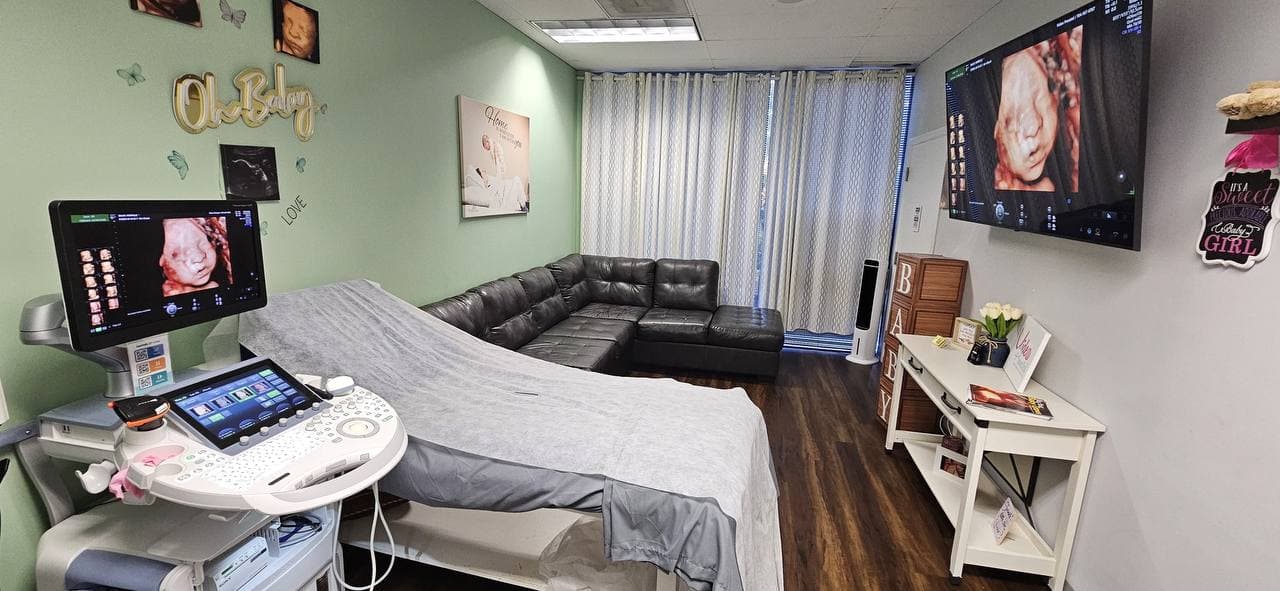
On the day itself, wear comfortable two-piece clothing so we can reach your belly easily, have a light snack if your provider says that is fine for you, and bring the people you love. Our room has seating for up to 8 guests, and siblings, grandparents and friends are all welcome.
What happens during a 3D/4D ultrasound session
When you arrive, we welcome you and your guests, confirm your package and answer any last questions. You relax on a comfortable bed, we apply warm gel to your belly and the scan begins, with the images shown on a large screen so everyone can watch together.
Depending on your package, we start with the basics (heartbeat, growth, weeks, due date and estimated weight) and then move to 3D, 4D and HD views. If your baby is shy, we may ask you to change position, walk a little or have a sip of something to encourage movement. At the end you receive printed pictures and, where included, digital pictures and video through the Bomee app, so sharing with family is easy.
We walk through every moment, from check-in to the last photo, in your 3D/4D ultrasound session, step by step.
Elective ultrasound and your prenatal care
An elective 3D/4D ultrasound is a keepsake and peace of mind experience. It is not diagnostic, it does not replace the ultrasounds your OB or midwife orders, and it is not covered by Medicaid or insurance. Your medical scans, including the anatomy scan that is typically done around 18 to 22 weeks, remain the place where your baby's health is checked.
Keep going to every prenatal appointment, and bring any health question to your provider. What we offer is different and complementary: time to see your baby calmly, with your family around you, and pictures to keep.
Choosing your 3D 4D ultrasound package
If you are in the second half of pregnancy and want to meet your baby's face, these are the packages most families choose. All sessions are Monday through Saturday by appointment only, and same-day appointments may be possible if you call or WhatsApp to confirm.
Booking requires no deposit. If your plans change, please give us at least 24 hours' notice to cancel or reschedule. Late cancellations or missed appointments may require a deposit for future bookings. Hablamos Español. When you are ready, you can book your 3D 4D ultrasound in Charlotte or compare everything side by side on our packages page.
- 5D Sneak Peek, $99, from 22+ weeks: 15 minutes, gender confirmation, heartbeat, 4 color 4x6 pictures, digital pictures, growth, weeks, due date and weight.
- Golden Memories, $129, 27+ weeks: 30 minutes of 5D/HD, 6 color 4x6 pictures, digital pictures and full video. Add an 8K hyperrealistic image for $25.
- Mommy Bundle, $169, 27+ weeks: 25 to 30 minutes of 5D/HD live, everything in Golden Memories plus unlimited digital pictures, digital video, an 8K hyperrealistic image and a Heartbeat Bear.
Frequently asked questions
What is the difference between a 3D and a 4D ultrasound?
A 3D ultrasound creates still images with depth, while 4D shows those 3D images moving in real time. In a 4D session you can watch your baby yawn, stretch or move their hands.
Is 5D ultrasound a different kind of scan?
No. 5D is the common name for HD rendering, which adds realistic light and skin tones to 3D and 4D images. It uses the same scan with a more lifelike display.
When should I book a 3D 4D ultrasound?
Our 5D Sneak Peek starts from 22 weeks, and our longer Golden Memories and Mommy Bundle sessions start from 27 weeks, when many babies show fuller cheeks. Your exact timing can depend on your pregnancy, so feel free to call us.
Does an elective 3D/4D ultrasound replace my medical ultrasound?
No. Our sessions are elective, non-diagnostic and for keepsake and peace of mind only. Please keep all the ultrasounds and appointments your OB or midwife recommends.
Can my family come to the appointment?
Yes. Family and friends are welcome, and our room has seating for up to 8 guests so everyone can watch on the big screen.