
 $169
$169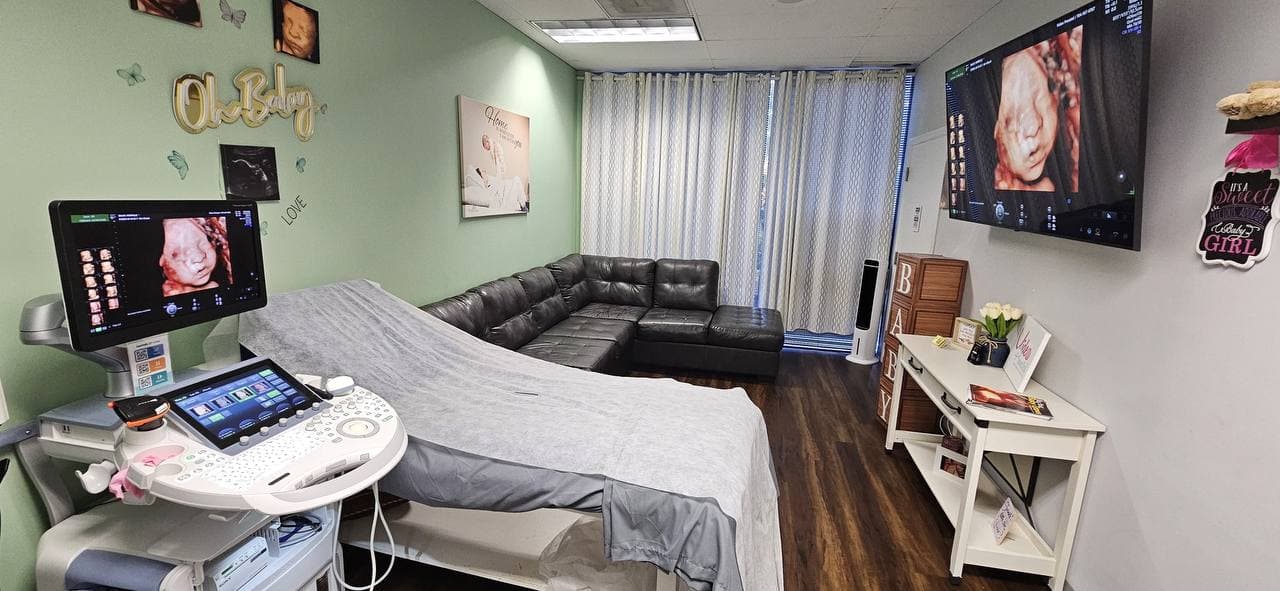 9 min
9 minCan Your Belly Shape Predict Boy or Girl?
Carrying high means a girl, carrying low means a boy? Here is why belly shape cannot predict your baby's sex, and what actually shapes your bump.
By the Video Prenatal team · September 7, 2026 · 4 min read
Our ultrasounds are elective, non-diagnostic, and performed solely for keepsake and peace of mind purposes. They are not a substitute for a medical ultrasound from your healthcare provider.
It is probably the first gender guess you will hear: carrying high means a girl, carrying low means a boy. Round and wide means one thing, pointed and forward means another. The belly shape boy or girl question comes up at almost every baby shower, and it is a sweet part of pregnancy tradition.
But can the shape of your bump really tell you anything? In this article we look at where the belief comes from, what actually shapes your belly, and how families can enjoy the game while getting a real answer when the time is right.
Where the Belly Shape Myth Comes From
Long before ultrasound existed, families had very few ways to guess whether a baby would be a boy or a girl. The belly was the most visible sign of pregnancy, so it became the canvas for predictions. Grandmothers compared bumps, neighbors offered opinions, and the stories were handed down for generations.
Because every guess has roughly a coin-flip chance of being right, many families remember the times it worked. Those memories keep the tradition alive, even though the method itself has nothing to do with the result.
The belief also varies from place to place. In some families a round bump means a girl, while in others the same shape means a boy. When a tradition predicts opposite results depending on who you ask, it is a good sign that it is folklore rather than fact.
What Science Says About Belly Shape and Gender
There is no scientific evidence that belly shape predicts boy or girl. Your baby's sex is set by genetics very early on, and it does not change the way your belly looks from the outside. Carrying high or low, wide or forward, is shaped by other factors entirely.
This is one of the classic myths we cover in our broader guide to pregnancy myths and facts. It sits right alongside other favorites, like the heartburn and hair belief, which you can read about in heartburn, cravings and other old wives' tales.
What Really Shapes Your Baby Bump
If belly shape is not about boy or girl, what is it about? Many parents notice their bump looks different from a friend's or even from their own previous pregnancy. That is completely normal, and there are several common reasons.
- Your body type and height, including the length of your torso.
- The tone of your abdominal muscles, which can differ in a first pregnancy compared with later ones.
- Your baby's position, which changes often and can make the bump look higher, lower or wider on different days.
- How far along you are, since the uterus grows and rises as pregnancy progresses.
- Amniotic fluid and the placement of the placenta, both of which vary from pregnancy to pregnancy.
When Belly Shape Questions Deserve a Real Answer
For gender guessing, belly shape is harmless fun. But if you ever feel your belly is measuring or changing in a way that concerns you, that is a question for your OB or midwife, not for a folk tale. Your provider tracks your baby's growth during prenatal visits and can explain what is normal for you.
It also helps to know that questions about your baby's development belong to medical care. Our elective sessions are for keepsakes and peace of mind, and we explain that difference clearly in elective vs medical ultrasound.
How Families Actually Find Out Boy or Girl
If you want a real answer rather than a guess, there are two common elective paths. The first is an early gender DNA blood test, which we offer from 8 weeks. The second is an ultrasound during the window when the anatomy is usually easier to see. We walk through the stages in weeks 15 to 18: when you might find out boy or girl.
Keep in mind that no method comes with a promise. On ultrasound, your baby's position plays a big role, and sometimes a little one simply does not cooperate. Your provider's medical scans remain the foundation of your prenatal care either way.
Ready to Trade the Guess for a Real Look?
When you are between 15 and 22 weeks, our Gender Reveal session ($79, 2D/3D) includes up to 15 minutes, gender determination or confirmation, the heartbeat, printed pictures and a full video, plus a sneak peek in 3D if baby is in a good position. Families and friends are welcome, with seating for up to 8 guests.
If you would rather know earlier, the SneakPeek Gender DNA Test ($150, from 8 weeks) is another option. You can book your session with no deposit whenever you are ready, and keep the belly guesses going just for fun.
Part of our complete guide: Pregnancy Myths and Facts: What Is True and What Is Not
Frequently asked questions
Does carrying high mean I am having a girl?
No. There is no scientific evidence that carrying high or low predicts boy or girl. Your bump's shape depends on things like body type, muscle tone and baby's position.
Why does my bump look different from my last pregnancy?
Many parents notice this. Changes in abdominal muscle tone, baby's position and other factors can make each pregnancy look different. Your provider can answer any specific concerns.
When can an ultrasound show boy or girl?
Our Gender Reveal session is offered from 15 to 22 weeks. Results depend on baby's position, so no ultrasound gender result can be guaranteed.